Affiliate marketing with creators in Saudi Arabia: codes, commission and what works
What a year of commission campaigns on Trendly shows, why every creator needs their own discount code, and the fee-plus-commission setup that gets creators to say yes.

Paying creators for the sales they bring sounds like the safest deal a brand can make. You pay for results, and the creator earns for as long as their followers keep buying. In practice, most commission-only campaigns in Saudi Arabia never get off the ground.
We looked at a year of campaigns brands posted on Trendly, and at the brand videos Trendly Studio tracks, to see what actually works.
What a year of commission campaigns shows
We reviewed almost 300 campaigns from about 190 brands, posted on Trendly between October 2025 and October 2026. Commission campaigns attracted applications, and about a third of those applications were accepted, yet only about one in five campaigns went on to hire anyone.
Trendly campaigns, Oct 2025 to Oct 2026
Commission-only campaigns struggle after the first yes
About 60% of commission briefs also gave each creator a discount code for their followers. Our operations team’s advice after watching this for a year is short: pay first, add commission later.
The reason is easy to see from the creator’s side. A commission-only deal asks them to spend a day filming and editing. They put their audience’s trust behind a product they may not know, then wait to see whether anyone buys, often without seeing the orders. Creators in Saudi Arabia already have paid work. What they complain about is chasing payments and agencies that pay late. A deal with no fee and no visible tracking looks like more of the same.
Why commission is still worth doing
None of this makes commission a bad idea. It makes commission-only a bad way to start.
- Creators want income that keeps coming. A fee pays once. A code that keeps selling pays every month. Big stores already invite creators to earn this way; Amazon.sa runs an associates programme for it.
- Brands want to know what sold. A code per creator turns "the campaign went well" into a number per person, so the next budget goes to whoever moved product.
- Few brands do it yet. In the Saudi brand videos Trendly Studio had recorded by 2 November 2026, only about 3% showed a discount code.
Give every creator their own code
Many brands start with one code, say SUMMER15, for everyone. It tells you creators sold something. It can’t tell you which creator, so you can’t pay commission fairly or know who to hire again. And once a shared code reaches a coupon site, it is everyone’s code.
A separate code for each creator fixes both. Make it easy to say out loud and type on a phone: the creator’s name plus a short number, such as NOURA10.
On Trendly
Choose affiliate when you post the campaign
Creators see the deal before they apply, and each one gets their own code.
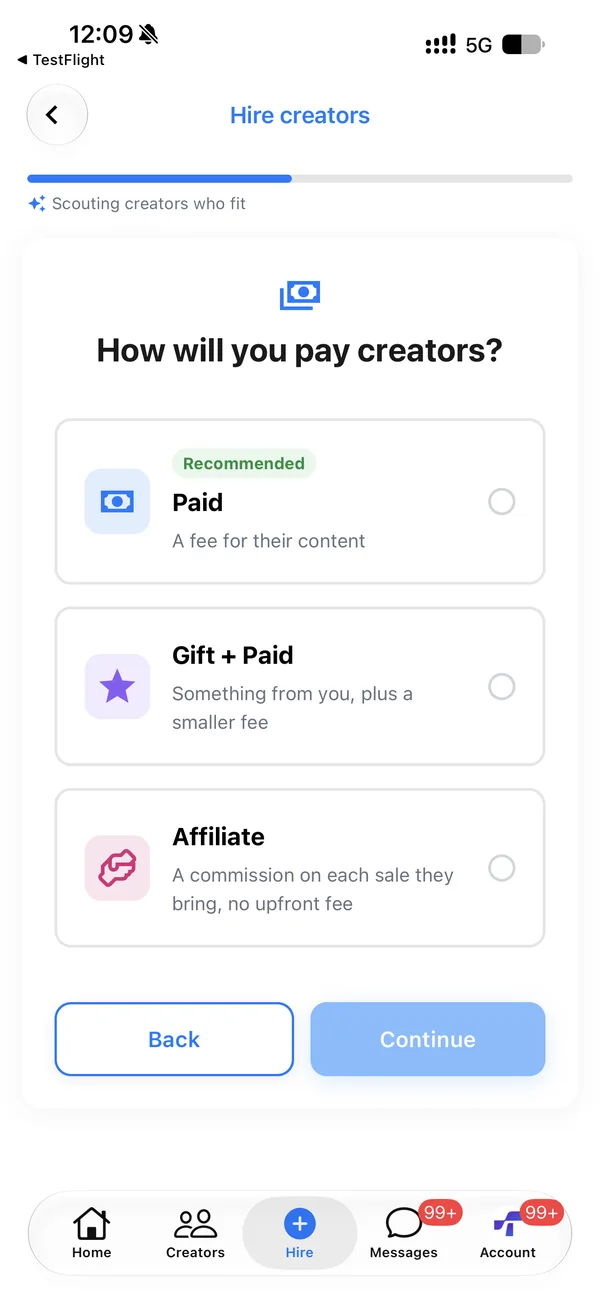
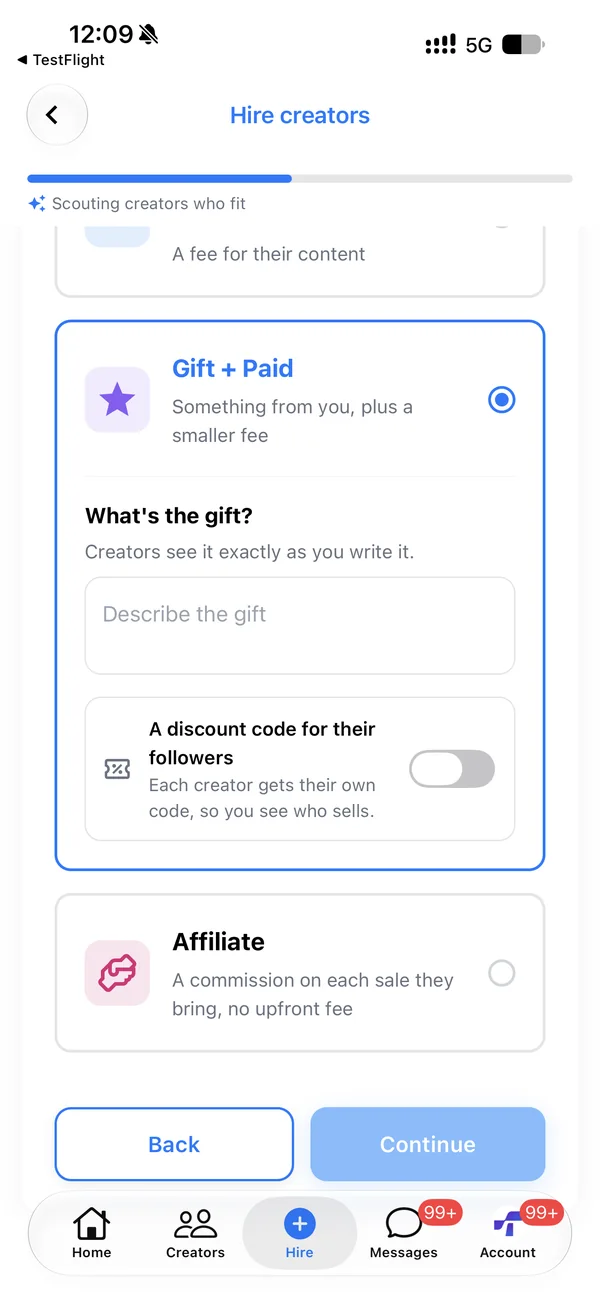
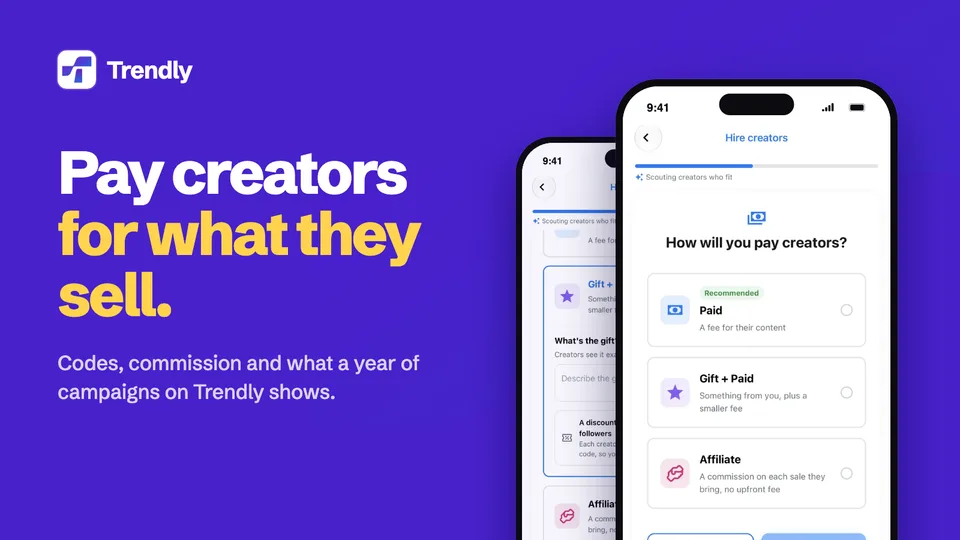
- Pick Paid, Gift + Paid or Affiliate.
- Switch on a discount code for each creator’s followers.
- Creators apply with their own price and see how commission works.
Set the discount the same way for everyone:
- One discount for the whole campaign. If one creator’s code gives 20% and another’s 10%, you are measuring the discount, not the creator.
- Big enough to type. Under about 10%, many viewers won’t bother.
- An end date. Codes that never expire leak to coupon sites and keep costing you margin.
- One use per customer if your store supports it.
Where codes work, and where they don’t
Codes show up where people buy online straight after watching. In Studio’s data, home, fashion and beauty videos showed a code several times more often than food and restaurant videos.
Trendly Studio, 2 November 2026
Share of Saudi brand videos showing a discount code
A restaurant visit sells a trip to the branch, not an online order, so codes are rare there.
Commission suits perfume, beauty, fashion, home goods and food delivered at home: things bought on impulse, online, with a margin that can pay the creator. It works poorly for restaurant visits, clinics and anything people think about for weeks. Pay a fee for those.
The setup that gets creators to say yes
Fee first, commission on top
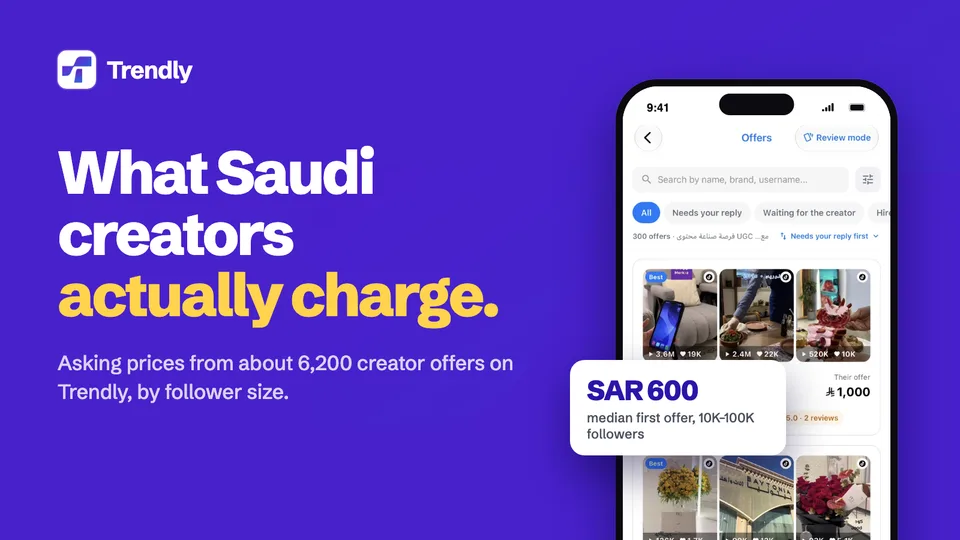
- Pay a fee for the first videoCreators with 10,000 to 100,000 TikTok followers asked a median of SAR 600 for a paid campaign on Trendly.
- Give each creator their own codeSame discount for everyone, with an end date.
- Add commission on the orders the code bringsPaid on orders that were not returned.
- After a month, look at who soldRaise commission for your best sellers and offer them a lower fee, or none.
By the time you move someone to commission, they have seen orders arrive and trust that they will be paid. The creators you keep on commission are the ones it already works for. For what creators ask at each follower size, see influencer ad prices in Saudi Arabia.
What to put in the brief
Creators accept commission when it is clear and paid on time. Write these down before the campaign starts:
- The rate, and whether it is on the order before or after the discount and VAT. Most brands pay on the order value after the discount, before VAT.
- Which orders count: online only, or also in shops if you can track them.
- How long the code is valid.
- When commission is paid, for example monthly, after the return window.
- What happens on returns and cancellations.
- How the creator can see their orders.
Where code tracking misleads you
- Codes undercount. Some buyers watch the video and buy later without the code, or in a shop. Treat code sales as the minimum each creator brought.
- Leaks overcount. Once a code reaches a coupon site, its orders have nothing to do with the creator. Watch for codes that suddenly sell far more than the creator’s views would explain.
- Returns. Recovering commission on a returned order is awkward. Pay after your return window closes, or reverse it automatically.
- Codes nobody owns. Orders arrive on old codes or typos. Someone has to decide who gets the credit.
The common mistakes on the brand side are just as costly: hiding the commission terms until after the video, paying on sales the creator can’t see, paying late, changing the rate mid-campaign, and judging after one week when some videos keep selling for a month. One late payment travels fast between creators.
Running it with more than a handful of creators
With five creators a spreadsheet works: create the codes in your store, export orders monthly, filter by code, subtract returns and send five transfers. At thirty it becomes a job. Codes leak and need replacing, creators ask what they’re owed every week, and IBANs need checking.
Trendly Affiliate handles that part. Each creator gets a code when you approve them, reissued if it leaks. Orders arrive from your store or are entered by hand and are credited to the code that brought them, at the rate that applied on the day. Commission tiers pay more to creators who sell more, returns reverse commission before it is paid, and each period ends in one payout run you approve and one transfer file for your bank. Creators see the orders behind their statement. Trendly's team switches it on for your brand: ask from your dashboard or send the team a message.
To start with paid work and add codes from day one, post a campaign on Trendly. To see which creators already share codes for brands like yours, browse the creator lists in Trendly Studio.
About the data
Campaign figures come from Trendly’s review of brand-created campaigns from 27 October 2025 to 18 October 2026, excluding imported and test campaigns. Studio figures come from the top videos recorded for each brand in the snapshot of 2 November 2026. Studio only sees what is visible in a public post, and a video appearing in Studio does not prove that it was paid.
Questions brands ask
Will creators in Saudi Arabia work for commission only?
Some will, but few. In Trendly’s campaign history, only about one in five commission campaigns hired anyone, and about one in eight hires was completed. Paid campaigns did far better.
Why give each influencer a separate discount code?
So every order that uses the code is credited to the creator who shared it. One shared code tells you creators sold something, but not who, so you can’t pay commission fairly or know who to hire again.
What commission rate should I offer?
Commission briefs on Trendly most often offered 10% of the order, with a range from 4% to 40%. Some brands paid a fixed SAR 15 to 50 per order instead. Choose what your margin can sustain and pay it on time.
Do discount codes capture every sale an influencer brings?
No. Some buyers forget the code, find another one or buy in a shop. Treat code sales as the minimum a creator brought you, and compare creators with each other rather than with your total sales.
Sources
In this article
- What a year of commission campaigns shows
- Why commission is still worth doing
- Give every creator their own code
- Where codes work, and where they don’t
- The setup that gets creators to say yes
- What to put in the brief
- Where code tracking misleads you
- Running it with more than a handful of creators
- About the data
Post a campaign free
Creators apply with their price. You pay only when you hire.
Post your first campaign